Driving Sustainable Procurement: The Growing Role of Environmental Criteria in Healthcare Tendering

Although many European countries, such as Finland and Poland, still lack environmental sustainability criteria in their tendering processes, and others like Estonia, Lithuania, Portugal, Slovakia, and Slovenia continue to rely solely on price as the main criteria for awarding tenders, numerous governments are beginning to prioritize environmental requirements in their healthcare tendering processes. 1
The analysis performed by Cube RM also reveals this trend.
FIGURE 11
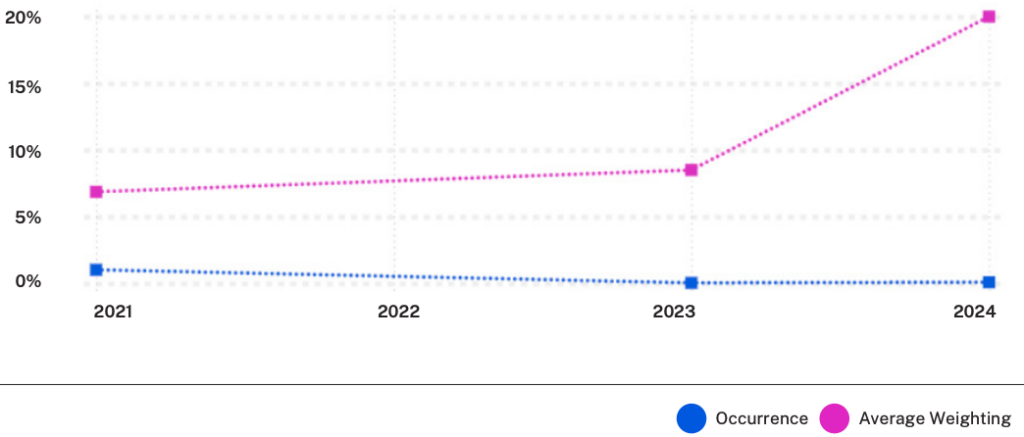
Year on year trend of % occurrence and average weighting of Social-Environmental sustainability in criteria used in awarded batches of top biosimilars' tenders since 2021

FIGURE 12
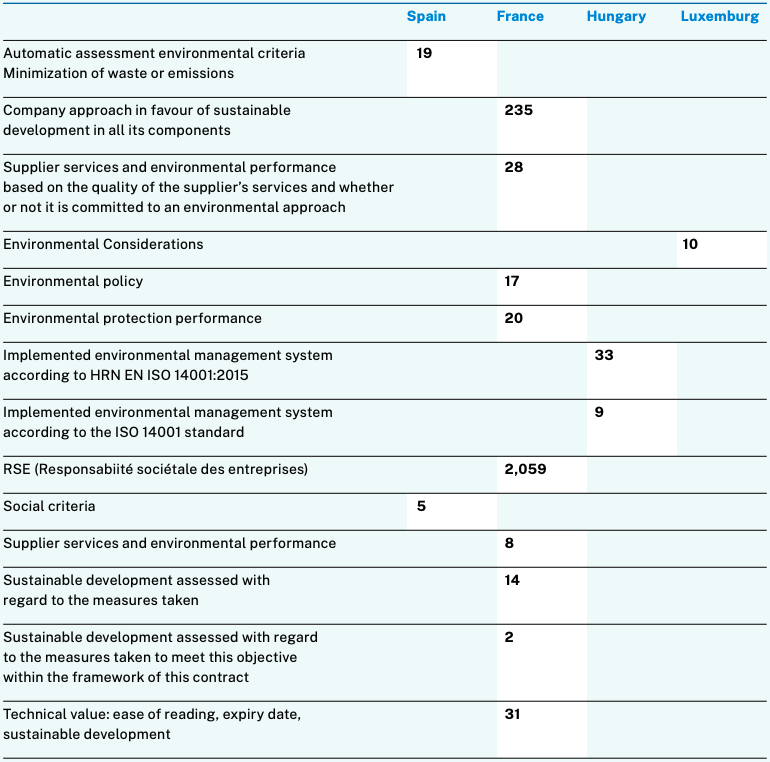
Examples of environmental tender criteria used in awarded lots (of all pharmaceuticals)
FIGURE 13
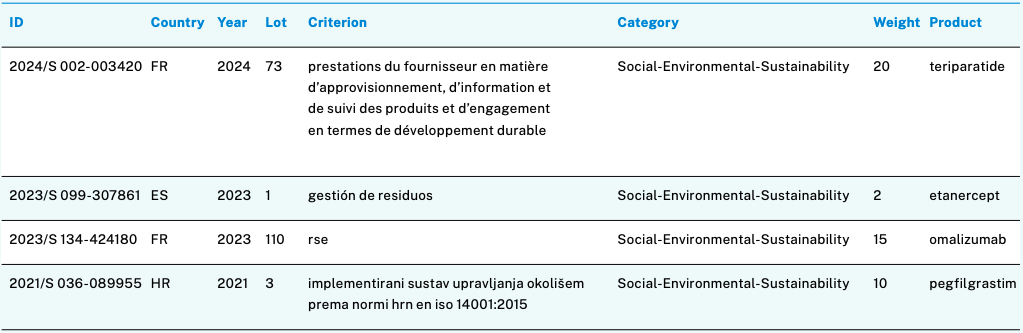
Examples of environmental tender criteria used in awarded lots (of biosimilars) and weight attributed
One clear example of the influence of environmental sustainability in tendering is the Net Zero Supplier Roadmap from NHS England, that started in 2022 with the requirement that all NHS procurements needed to include a minimum 10% net zero and social value weighting.
The plan, extending beyond 2030, establishes that suppliers will only be able to qualify for NHS contracts if they can demonstrate their progress through published progress reports and continued carbon emissions reporting. 17

Such other examples are replicated throughout Europe:
- In Germany, the government has implemented guidelines emphasizing the use of eco-friendly products and services 18
- In Belgium, environmental criteria such as waste reduction and water recycling have been applied when awarding bids 1
- In Denmark, Croatia, Norway, and Spain, centralised PPM at national level includes environmental criteria 1, 19
- In the Netherlands, the Dutch government’s criteria for sustainable healthcare procurement focuses on reducing the carbon emissions and promoting circular economy practices 20
- And in Ireland, suppliers are benefited when they provide medicines in recyclable packaging 1
As a result, one of the main challenges pharmaceutical companies face is balancing the increasingly important environmental sustainability practices with the need to remain competitive, especially when price is still the primary criterion for awarding contracts.
Incorporating environmental sustainability into companies’ processes can be a significant undertaking. It requires a comprehensive approach, including changes in manufacturing, supply chain management, and product design. Many of these changes are heavily regulated and resource-intensive, often taking a considerable amount of time to be approved and implemented. However, in the long term, there are numerous benefits that can encourage pharmaceutical companies to go green:
- While implementing sustainable practices may involve initial costs, it can lead to long-term savings. Companies that invest in green technologies, energy efficiency, and waste reduction can reduce operational costs, making their bids more competitive.
- Demonstrating a commitment to environmental sustainability enhances a company’s reputation and builds trust with stakeholders, including healthcare providers, patients, and regulators. This positive perception can influence tender decisions in favour of companies perceived as responsible and forward-thinking.