The importance of environmental sustainability in the pharmaceutical industry cannot be overstated. As the industry continues to grow, its environmental footprint also expands, contributing to pollution and resource depletion.
From the raw material extraction, to manufacturing processes, global distribution, and eventual disposal6, the pharmaceutical industry is responsible for generating approximately 52 megatons of CO27 annually – an amount exceeding the emissions of the automotive sector in nations like the UK.
As concerns about climate change, ecosystem protection, and human health continue to rise, numerous frameworks have highlighted the numerous frameworks have highlighted the need to address the environmental impact of the healthcare sector, including the Paris Agreement8, the UN’s Sustainable Development Goals (SDG)9, and the Greenhouse Gas Protocol10.
B The Corporate Sustainability Due Diligence Directive (CSDDD) applies to large EU limited liability companies and partnerships, encompassing approximately 6,000 companies with more than 1,000 employees and a net turnover exceeding EUR 450 million worldwide. For large nonEU companies, around 900 entities with a net turnover of more than EUR 450 million within the EU are included. The Directive includes provisions to facilitate compliance and limit the burden on companies, both in scope and within the value chain. Micro companies and SMEs are not directly covered by the proposed rules, but the Directive provides supporting and protective measures for SMEs that might be indirectly affected as business partners in value chains.


In the EU, the European Commission has been actively developing plans and roadmaps to establish environmental sustainability criteria in healthcare tenders. Some key initiatives and frameworks include:
- The European Green Deal, introduced in 2019, aims to transform the EU into a sustainable, climate-neutral economy by 2050. The Green Deal emphasizes the importance of creating sustainable healthcare systems that not only protect human health but also the environment. This include promoting the use of safer chemicals, reducing pharmaceutical pollution, and ensuring sustainable procurement practices.11, 12
- The Corporate Sustainability Due Diligence Directive (CSDDD) mandates that companies identify, mitigate, and transparently report on environmental impacts throughout their operations and value chains. To comply with the CSDDDB, companies will need to invest in sustainability initiatives such as adopting green technologies, improving energy efficiency, and ensuring sustainable procurement practices. This directive encourages collaboration between companies, governments, and other stakeholders to develop innovative and responsible solutions to address their environmental impact.13
- The Circular Economy Action plan, which aims to promote sustainable resource use and reduce waste, encourages pharma companies to adopt eco-design principles such as creating products that are easier to recycle, designing products for longer use, and using secondary raw materials. 14,15
- Across Europe, several countries have also started developing their own sustainability initiatives, focusing on the impact of procurement/tendering and health technology assessments, and how to contribute to the United Nation’s Sustainable Development Goals.
FIGURE 10
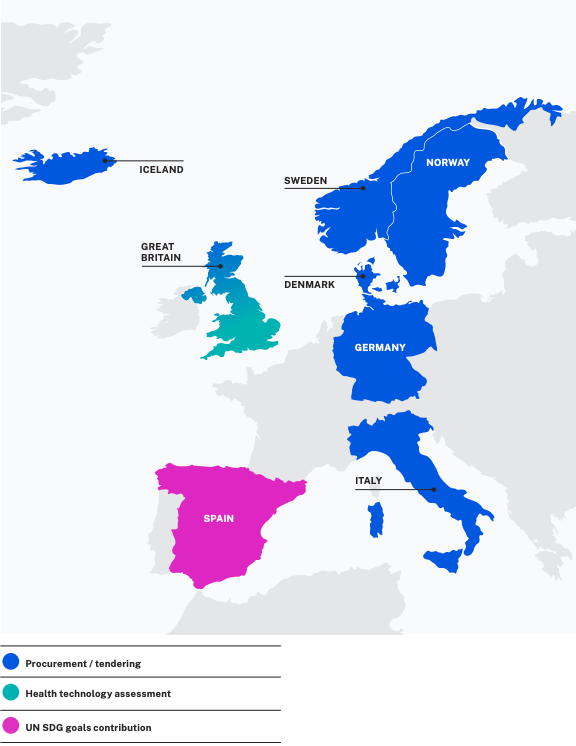
European countries with sustainability initiatives Adapted from HPR195 Assessing the Adoption of Sustainability Criteria Within National Healthcare Procurement Policies in Europe