In the EU, healthcare expenditure accounted for approximately 11% of total annual GDP in 2021

For public authorities and purchasers in the healthcare sector, the increasing availability of generic and biosimilar alternatives has made tendering an effective way to lower prices and increase patient access to treatments, while keeping healthcare expenditure under control. For companies, tendering can break monopolies by fostering open competition and equal opportunities, while also increasing transparency through public announcements and clear selection criteria.


However, traditional tendering practices with “winner takes all” and “price-only” scenarios often result in negative outcomes:
- In France, for example, a “winner takes all” approach led to product withdrawals from the market. Over time, some medicine classes had only one alternative available, causing shortages when supply quotas couldn’t be met.
- When “price-only” criteria are used, pharmaceutical companies tend to resort to aggressive price-cutting behaviours driven by market share and sales priorities, further perpetuating price erosion in the pharmaceutical tendering market. The significant profit loss associated with the resulting price erosion can make commercialization unattractive, reducing supplier numbers and potentially increasing prices and shortages in the long term, effectively re-establishing a monopolization of the market.
In recent years, efforts to transform tendering into a more sustainable practice have led to various actions. These include reducing administrative burdens through pre-qualifications and electronic bidding systems, splitting contracts to minimize shortages, and awarding contracts based on criteria beyond price, such as supply and logistics, and environmental sustainability.
The European Commission conducted an online survey involving various stakeholders, such as national authorities for medicine pricing and reimbursement, public procurers, payers, pharmacists, patient representatives, and representatives from the pharmaceutical industry and wholesalers. The survey explored how specific PPM practices and procedures affect different policy goals.
Among the 58 participants, MEAT (Most Economically Advantageous Tender practices were ranked as the most important for achieving affordability, competition, and supply security. Stakeholders also highlighted that, similar to ensuring supply security, procurers might need to balance different policy objectives. Specifically, incorporating environmental criteria in procurement could lead to higher prices and/or reduced competition.

Average importance of PPM award criteria by policy objective Adapted from the European Commission Study on Best Practices in the Public Procurement of Medicines: Final Report
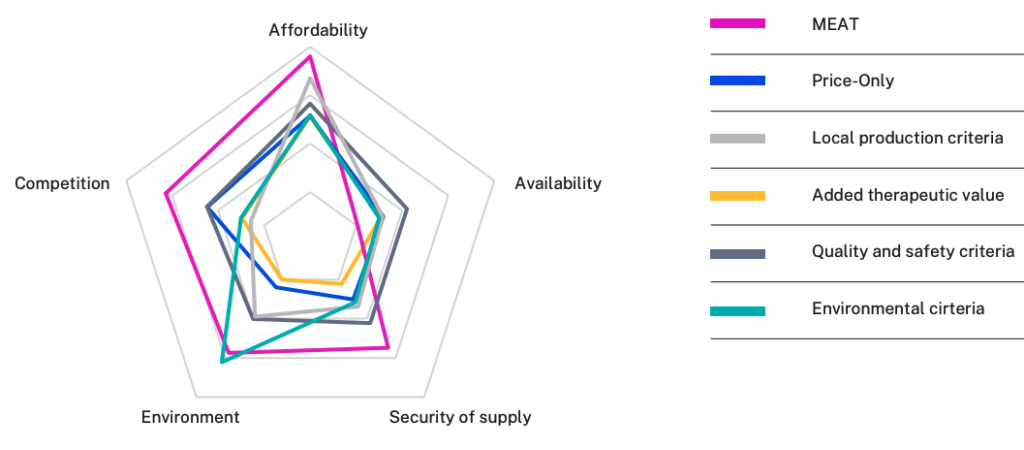
Ideally, depending on local policies and ambitions, different award criteria and tender practices should be given priority, reflecting a more balanced and holistic approach to procurement.